

Money Mindset in India: How to Build Better Financial Habits
A practical guide to understanding money emotions, reducing impulsive spending and building repeatable financial habits for everyday life in India.
Money decisions are rarely only about mathematics. Family expectations, social comparison, stress and past experiences can influence how we save, spend and borrow. A useful money mindset does not mean avoiding every purchase. It means making decisions that support your priorities instead of reacting to pressure.
What a healthy money mindset looks like
A healthy approach starts with awareness. You know how much comes in, where it goes and which goals matter most. You can enjoy planned spending without feeling guilty, while also accepting that every financial choice has a trade-off. The aim is control and clarity, not perfection.
Notice your spending triggers
For one month, write down the reason behind each unplanned purchase. Common triggers include boredom, stress, discounts, social events and the belief that an item will improve your status. Naming the trigger creates a pause between the feeling and the transaction.
Use a simple pause rule
For non-essential purchases, wait 24 hours before paying. For expensive items, wait at least seven days and compare alternatives. During the pause, ask: do I need this now, will I use it regularly, and does it fit this month’s budget? If the answer is unclear, postpone it.
Create defaults that make good choices easier
Automate a small transfer to an emergency fund after income arrives. Keep a separate account for bills and avoid saving card details on shopping platforms. Good defaults reduce the number of decisions you must make when you are tired or busy.
Replace vague goals with visible targets
“Save more” is difficult to act on. A target such as building ₹30,000 for emergencies over six months is clearer. Divide the target into a monthly amount, track progress once a week and adjust the amount when income changes.
Deal with social pressure
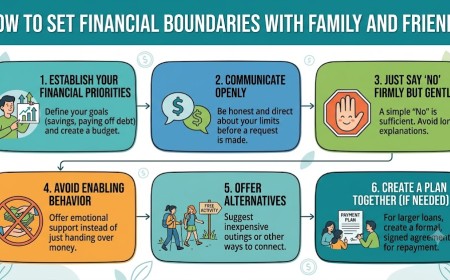
It is reasonable to set a spending limit for weddings, festivals, travel and group outings. You can suggest a lower-cost plan or explain that you are following a savings goal. A respectful boundary is healthier than borrowing to maintain appearances.
Recover after a mistake
One impulsive purchase does not ruin a financial plan. Review what happened, return the item when appropriate, and add a practical safeguard such as a waiting rule or spending limit. Avoid extreme responses that make the plan impossible to follow.
A weekly money reset
- Check your account balances and upcoming bills.
- Review unplanned purchases without judging yourself.
- Move the planned amount to savings.
- Choose one expense to reduce or one goal to advance.
Final takeaway
Better money habits are built through small repeated actions. Understand your triggers, make saving automatic, set realistic limits and review your progress regularly. Over time, these systems can be more reliable than willpower alone.
Start with a 30-Day Money Observation
Before changing every habit at once, spend one month observing how money actually moves through your life. Note income, fixed commitments, daily spending and the situations that trigger unplanned purchases. The purpose is not to judge yourself. It is to replace vague feelings with evidence. A person who thinks “I always overspend” may discover that most leakage happens only on stressful weekends or immediately after salary day.
Use three simple labels: essential, meaningful and avoidable. Rent, food and medicines may be essential; a planned family outing can be meaningful; an unused subscription may be avoidable. This method is more realistic than calling every non-essential purchase wasteful.
A Practical Habit Loop for Saving
Good financial behaviour becomes easier when the cue, action and reward are clear. For example, make salary credit the cue, an automatic transfer to savings the action and an updated goal tracker the reward. Start with an amount you can repeat even in an expensive month. Consistency matters more than choosing an impressive number that you cancel later.
- Schedule savings within 24 hours of receiving income.
- Keep emergency money separate from everyday spending.
- Review subscriptions and recurring payments once a month.
- Use a 24-hour pause for non-essential purchases above your personal limit.
- Increase savings after a raise instead of waiting for motivation.
Example: A ₹40,000 Monthly Income
Suppose a professional receives ₹40,000 after deductions. They may first reserve ₹22,000 for household essentials, ₹5,000 for near-term goals, ₹3,000 for an emergency fund and ₹2,000 for insurance or irregular annual expenses. The remaining amount can cover flexible spending. These figures are only an illustration—the useful part is assigning money before emotion or social pressure decides where it goes.
How to Recover After a Bad Month
A missed savings target is information, not proof that you are “bad with money.” Check whether the plan ignored a real expense, the target was too aggressive or an emotional trigger led to spending. Make one adjustment for the next month. Avoid extreme restrictions because they often create a cycle of deprivation and rebound spending.
Questions to Ask Every Month
- Which expense gave real value and which one was quickly forgotten?
- Did any payment surprise me because I had not planned for it?
- Can I automate one useful action before next salary day?
- Is my emergency fund becoming easier to access but harder to spend casually?
Reliable Financial-Education Reference
The Reserve Bank of India financial literacy material highlights budgeting, saving, responsible borrowing, timely repayment and dealing only with registered entities. Use official resources for general education and consult an appropriately qualified professional before acting on personalised investment, tax or insurance decisions.
What's Your Reaction?
 Like
0
Like
0
 Dislike
0
Dislike
0
 Love
0
Love
0
 Funny
0
Funny
0
 Wow
0
Wow
0
 Sad
0
Sad
0
 Angry
0
Angry
0

Software developer with expertise in full-stack web development and financial market analysis, specializing in building tracking tools for trading metrics.







Comments (0)