

How to Set Financial Boundaries with Family and Friends
Learn how to discuss lending, shared expenses and financial limits with family and friends respectfully and clearly.

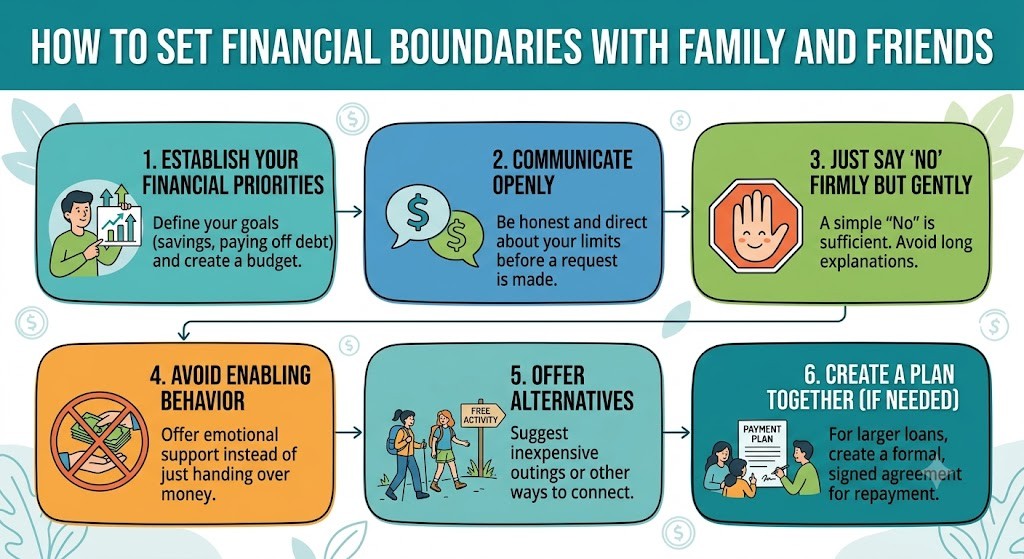
Money conversations can become difficult when family and friendship are involved. A clear boundary protects both the relationship and your own financial stability. It is not a refusal to care; it is an honest statement about what you can responsibly afford.
Know your limit before the conversation
Review your essential expenses, debt payments and emergency savings before agreeing to help. Decide the maximum amount, whether it is a gift or a loan, and the date by which you can provide it. Never promise money that would require you to miss rent, bills or insurance payments.
Use direct and respectful language
Explain your position without blaming the other person. You can say, “I cannot lend that amount, but I can help you review the budget.” Avoid vague promises that create expectations you may not be able to meet.
Be careful with informal loans
For a genuine loan, write down the amount, repayment dates and what happens if repayment is delayed. Written terms reduce misunderstanding. Do not borrow at high cost to lend money to someone else.
Separate support from control
Helping someone does not give you the right to control every decision they make. Offer practical help such as comparing bills, finding a legitimate service or preparing a repayment plan, while respecting their independence.
Shared household expenses
For rent, groceries or family events, agree on the total budget and each person’s contribution before spending. Keep records for recurring costs. Small clarity at the start prevents resentment later.
Final takeaway
Healthy financial boundaries are specific, consistent and kind. Decide what you can afford, communicate early and avoid commitments that put your own essentials at risk.
Why Financial Boundaries Feel Difficult
Money requests inside families are rarely only financial. Gratitude, duty, reputation and fear of disappointing someone may all be involved. A healthy boundary does not mean refusing every request. It means deciding what you can offer without missing rent, school fees, medical needs, debt payments or your own emergency savings.
Before agreeing, pause and check three facts: the amount you can genuinely afford, whether the request is a gift or a loan, and what will happen if the money is never returned. If losing the amount would damage your essential plans, the safest answer is usually to decline or offer a smaller form of help.
Decide Your Family-Support Budget in Advance
Create a monthly or yearly support limit instead of making decisions during emotional conversations. For example, a household may reserve ₹2,000 per month for gifts and genuine emergencies. Once that amount is used, further requests wait unless the family revises the wider budget together. A predefined limit makes the decision about affordability, not about who asks most forcefully.
Gift, Loan or Shared Expense?
- Gift: Give only what you can lose without resentment.
- Loan: Agree on the amount, repayment dates and method in writing.
- Shared expense: Record each person’s contribution and the exact purpose.
- Emergency support: When possible, pay the hospital, school or service provider directly.
Calling money a “loan” while privately expecting it to become a gift creates tension. A short written message can protect the relationship: “I am lending ₹15,000 today. We agreed on three monthly repayments of ₹5,000 beginning 5 November.” This is clarity, not distrust.
Polite Scripts You Can Use
You can say, “I cannot manage that amount without disturbing essential expenses, but I can help with ₹3,000.” Another option is, “I am not able to lend money, but I can help you compare lower-cost alternatives.” If you need time, say, “Let me check our household commitments and answer tomorrow.” A pause prevents an instant promise made under pressure.
Protect Documents and Digital Access
Financial help should not require sharing your UPI PIN, OTP, banking password or unrestricted access to your phone. Avoid becoming a guarantor or co-borrower unless you fully understand that you may become responsible for repayment. Do not sign blank forms, and keep copies of anything you sign.
When Boundaries Are Repeatedly Ignored
Stop negotiating the same limit every week. Repeat a short answer without adding new explanations. If harassment, threats or coercion are involved, keep records and seek support from a trusted person or appropriate professional. Your safety takes priority over appearing agreeable.
A Monthly Relationship Check
Discuss shared goals before a crisis: emergency savings, care for parents, education costs and festival spending. The RBI’s financial-literacy material treats budgeting, responsible borrowing and consumer protection as core money skills. Those basics also make family conversations more concrete and less personal.
This article provides general educational information and is not legal, lending or financial advice.
Before Saying Yes: Five-Minute Decision Test
Write the requested amount, your current emergency savings and the essential payment dates due before your next income. Ask whether you would borrow to fund the request and whether similar requests are recurring. If the answer creates anxiety, offer a smaller amount, practical help or a respectful refusal. Do not use money already assigned to tax, rent, debt repayment or medical needs.
Frequently Asked Questions
Should I charge interest when lending to a relative? That depends on the relationship, amount and applicable law. Whatever you decide, record it clearly. What if someone says family should not need paperwork? Explain that written terms protect both people’s memory and reduce future conflict. Can I change a boundary later? Yes, but make the change deliberately after reviewing affordability—not because of pressure in the moment.
What's Your Reaction?
 Like
0
Like
0
 Dislike
0
Dislike
0
 Love
0
Love
0
 Funny
0
Funny
0
 Wow
0
Wow
0
 Sad
0
Sad
0
 Angry
0
Angry
0








Comments (0)