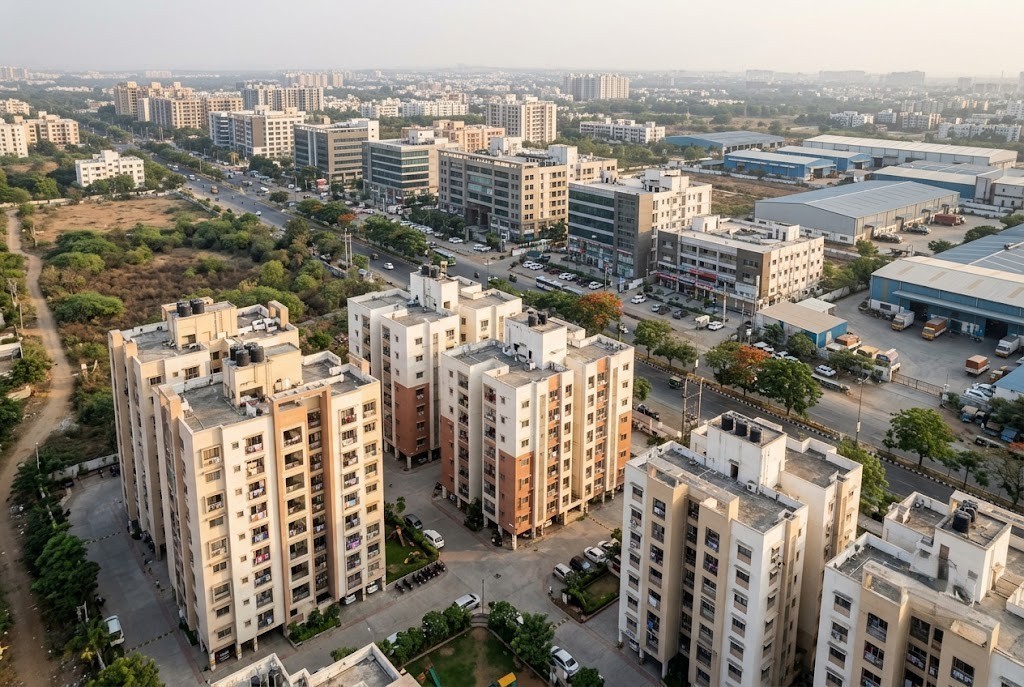

Real Estate Investment in India: A Beginner’s Guide

Learn how real-estate investment works in India, including property types, rental income, appreciation, home loans, investment costs, RERA verification, due diligence, risks and REITs.

Sep 09, 2026 - 23:12
Updated: 7 hours ago
0 0
Real Estate Investment in India: A Beginner’s Guide

Real Estate Investment in India: A Beginner’s Guide

Real estate is one of the most familiar investment options in India. People purchase houses, apartments, shops, offices and land for personal use, rental income or long-term financial growth.

However, buying property is very different from making a small investment through a bank or investment application. It normally requires a large amount of money, extensive documentation and a long-term commitment.

Property prices do not always rise, and rental income is not guaranteed. Maintenance costs, taxes, loan repayments and legal issues can significantly affect the final return.

This beginner-friendly guide explains how real-estate investment works, its major types, potential returns, costs, risks and the checks you should complete before purchasing a property.

What Is Real Estate?

Real estate refers to land and permanent structures attached to it, such as houses, apartments, offices, shops, warehouses and factories.

Real estate may be purchased for:

  • Personal residence

  • Business use

  • Rental income

  • Capital appreciation

  • Future development

  • Portfolio diversification

A person who buys an apartment and rents it to a family is investing in residential real estate. A company that purchases an office for its operations is also using real estate, although its primary purpose may be business use rather than investment.

Major Types of Real Estate

Different categories of real estate have different costs, income potential and risks.

1. Residential Real Estate

Residential properties are designed for people to live in.

Examples include:

  • Apartments

  • Independent houses

  • Villas

  • Residential plots

  • Builder floors

  • Studio apartments

Residential property is commonly purchased for personal use or rental income.

2. Commercial Real Estate

Commercial properties are used for business activities.

Examples include:

  • Offices

  • Retail shops

  • Shopping spaces

  • Business centres

  • Clinics

  • Restaurants

Commercial properties may offer attractive rental opportunities, but their prices, lease arrangements and vacancy risks can differ significantly from residential property.

3. Industrial Real Estate

Industrial real estate includes:

  • Factories

  • Warehouses

  • Manufacturing units

  • Logistics facilities

  • Distribution centres

These properties are generally selected according to transportation access, zoning, infrastructure and business requirements.

4. Land

Land may be purchased for agriculture, construction or future development.

Land investment can involve additional risks related to:

  • Ownership records

  • Land use

  • Access roads

  • Boundaries

  • Development permissions

  • Encumbrances

  • Local restrictions

Independent legal verification is especially important before purchasing land.

5. Real Estate Investment Trusts

A Real Estate Investment Trust, or REIT, provides a way to participate in income-generating real estate without directly purchasing an entire property.

SEBI’s investor-education material explains that REITs own, operate and manage portfolios of income-generating real-estate assets.

Listed REIT units may be purchased through the securities market. Their prices and distributions can change, so they should not be treated like guaranteed fixed-income products.

How Can Real Estate Generate Returns?

Real estate may generate returns in several ways.

Rental Income

The owner may rent the property to a tenant and receive periodic rent.

The actual income remaining with the owner may be lower after considering:

  • Maintenance

  • Property-related taxes

  • Repairs

  • Insurance

  • Brokerage

  • Vacancy periods

  • Society charges

  • Loan repayments

Capital Appreciation

Capital appreciation occurs when the market value of a property increases.

For example, if a property is purchased for ₹40 lakh and later sold for ₹50 lakh, the increase in value is ₹10 lakh before deducting purchase, ownership, financing, sale and tax-related costs.

Appreciation is not guaranteed. Prices can remain unchanged or decline because of weak demand, oversupply, legal disputes, poor construction, infrastructure delays or economic conditions.

Business Use

A business may purchase an office, shop, warehouse or factory instead of paying rent to another owner.

The financial benefit depends on the total ownership cost, financing cost, location and future business requirements.

Property Development

Some investors purchase land or old properties for development or redevelopment.

This approach may offer higher potential returns, but it also involves greater legal, construction, approval and financing risks.

Rental Yield: A Basic Calculation

Rental yield measures the annual rental income in relation to the property’s cost or value.

A simple gross-rental-yield formula is:

Gross Rental Yield = Annual Rent ÷ Property Cost × 100

Suppose a property costs ₹50 lakh and generates ₹2 lakh in annual rent:

₹2,00,000 ÷ ₹50,00,000 × 100 = 4%

This is the gross yield. It does not account for maintenance, vacancy, taxes, repairs or financing costs.

A more realistic calculation should use the total acquisition cost and deduct recurring property expenses from the rent.

Direct Property vs REIT

Both provide real-estate exposure, but their structures are different.

Direct Property Investment

The investor purchases and controls a physical property.

Potential advantages:

  • Direct ownership and control

  • Opportunity to use or modify the property

  • Potential rental income

  • Possibility of long-term appreciation

Potential disadvantages:

  • Large initial investment

  • Legal and documentation requirements

  • Maintenance responsibilities

  • Tenant-management issues

  • Low liquidity

  • High transaction costs

REIT Investment

The investor purchases units representing an interest in a professionally managed real-estate portfolio.

Potential advantages:

  • Smaller investment compared with buying an entire property

  • No direct tenant or building management

  • Access to income-generating real estate

  • Listed units may provide better liquidity than a physical property

Potential disadvantages:

  • Market-price fluctuations

  • No direct control over individual properties

  • Returns and distributions are not guaranteed

  • Exposure to property-market and management risks

Investors should verify whether a REIT is registered with SEBI and review its disclosures before investing. SEBI maintains information about recognised real-estate investment trusts and the regulations governing them.

Important Costs of Buying Property

The advertised property price is not always the final amount paid by the buyer.

Potential costs may include:

Down Payment

A home or property loan may finance only part of the purchase. The buyer may need to contribute the remaining amount.

Stamp Duty and Registration

Property registration generally involves stamp duty, registration fees and other documentation costs. Applicable charges depend on the property and location.

Loan-Related Costs

A loan may involve:

  • Interest

  • Processing fees

  • Valuation charges

  • Legal-verification charges

  • Insurance-related costs

  • Prepayment conditions

  • Late-payment charges

Brokerage

A property agent may charge the buyer, seller or both parties.

Maintenance and Society Charges

Apartments and commercial properties may have monthly or annual maintenance expenses.

Repairs and Interiors

Ready properties may still require painting, repairs, furniture or interior work before they can be occupied or rented.

Property-Related Taxes

The owner may have to pay applicable local taxes and comply with tax obligations arising from rent or sale.

Vacancy Cost

An investment property may remain empty between tenants. The owner must still pay maintenance, loan instalments and other costs during that period.

Home Loans and Property Finance

A property loan allows a buyer to purchase real estate using borrowed money.

The borrower generally repays the loan through periodic instalments containing principal and interest.

Before selecting a loan, compare:

  • Interest-rate structure

  • Total loan cost

  • Loan duration

  • Monthly instalment

  • Processing and administrative charges

  • Down-payment requirement

  • Prepayment or foreclosure conditions

  • Late-payment consequences

  • Insurance requirements

  • Fixed-rate and floating-rate terms

Do not select a loan only because the monthly instalment appears low. A longer tenure may reduce the monthly payment but increase the total interest paid.

The borrower should also maintain an emergency reserve. Depending entirely on future salary increases or rental income to repay the loan can create financial stress.

What Is RERA?

The Real Estate (Regulation and Development) Act, 2016, commonly associated with RERA, established a regulatory framework for eligible real-estate projects and agents.

The Ministry of Housing and Urban Affairs states that real-estate projects covered by the Act must be registered with the applicable State Real Estate Regulatory Authority before being offered for booking or sale.

Buyers can use the relevant state or union-territory RERA portal to check available information such as:

  • Project registration

  • Promoter details

  • Approved project information

  • Declared completion schedule

  • Registered agents

  • Complaints or orders, where available

  • Project updates and disclosures

RERA registration is an important check, but it should not replace independent legal, financial and physical verification.

Property Due-Diligence Checklist

Due diligence means carefully investigating the property before making a financial commitment.

Verify Ownership and Title

Confirm that the seller has a clear and legally valid right to sell the property.

A qualified property lawyer should examine the relevant title documents and ownership history.

Check for Encumbrances

Determine whether the property is affected by an existing loan, legal claim, unpaid charge or another restriction.

Verify the RERA Registration

For a project covered by RERA, verify its registration and disclosures through the official state or union-territory RERA website.

Review the Approved Plan

Compare the property being sold with the approved building or layout plan.

Confirm Land Use

Check whether the land is legally permitted for the intended residential, commercial, industrial or other use.

Check Necessary Certificates

Depending on the property type and stage, relevant documents may include:

  • Completion certificate

  • Occupancy certificate

  • Building approvals

  • Local-authority permissions

  • Society documents

  • Utility approvals

Verify Outstanding Dues

Check for unpaid:

  • Maintenance charges

  • Property taxes

  • Utility bills

  • Loan obligations

  • Society dues

Inspect the Property Physically

Look for construction quality, structural damage, water leakage, ventilation, electrical problems and other defects.

Confirm the Actual Area

Understand whether the quoted area refers to carpet area, built-up area or another measurement.

Review the Sale Agreement

The agreement should clearly state the:

  • Property details

  • Price and payment schedule

  • Possession conditions

  • Rights and obligations

  • Delay provisions

  • Included facilities

  • Cancellation terms

  • Dispute process

Investigate the Location

Review access to roads, public transport, employment areas, hospitals, schools, markets and essential services.

Ready-to-Move vs Under-Construction Property

Ready-to-Move Property

The buyer can physically inspect the completed property before purchasing it.

Potential advantages:

  • Construction quality can be examined

  • Immediate possession may be possible

  • Local facilities can be evaluated

  • Rental income may begin sooner

Potential disadvantages:

  • Price may be higher in an established area

  • Design customisation may be limited

  • An older property may require repairs

Under-Construction Property

The property is purchased before construction is complete.

Potential advantages:

  • Payment may be linked to construction stages

  • Early-stage pricing may be lower

  • Buyers may have more unit choices

Potential disadvantages:

  • Possibility of delay

  • Final construction may differ from expectations

  • Rental income cannot begin until possession

  • The buyer may pay both rent and loan-related costs during construction

  • Project or promoter risk may be higher

The buyer should verify project registration, approvals, construction progress and agreement terms before booking.

How to Evaluate a Real-Estate Investment

Step 1: Define the Purpose

Decide whether the property is for:

  • Personal use

  • Rental income

  • Business use

  • Long-term appreciation

  • Portfolio diversification

Step 2: Set a Realistic Budget

Include the property price as well as registration, financing, repairs, interiors and emergency costs.

Step 3: Research the Location

Compare infrastructure, demand, supply, rental activity and future development.

Step 4: Estimate Rental Income

Use realistic rent based on comparable properties rather than relying only on the seller’s claim.

Step 5: Calculate Net Return

Deduct expected maintenance, vacancy, taxes, repairs and financing costs.

Step 6: Complete Legal Verification

Hire an independent professional to review ownership and property documents.

Step 7: Inspect the Property

Examine construction quality, surroundings, accessibility and essential services.

Step 8: Compare Financing Options

Compare the complete loan cost and check whether repayments remain manageable under a conservative income estimate.

Step 9: Plan the Exit

Consider how easily the property could be sold and what expenses may apply at the time of sale.

Major Risks of Real-Estate Investment

Market Risk

Property prices and rents may rise, remain flat or decline.

Liquidity Risk

Selling a property may take weeks, months or longer. A quick sale may require a lower price.

Legal Risk

Unclear ownership, disputes, unauthorised construction or missing approvals can create serious problems.

Construction Risk

Under-construction projects may face delays, quality issues or financial difficulties.

Vacancy Risk

A rental property may remain empty while the owner continues paying regular expenses.

Tenant Risk

Late rent, property damage or disputes can affect returns.

Interest-Rate Risk

Changes in floating borrowing rates may affect loan instalments or repayment costs.

Concentration Risk

A large part of the investor’s total wealth may become tied to one property and one location.

Maintenance Risk

Unexpected structural, electrical, plumbing or society-related expenses can reduce returns.

Common Real-Estate Investing Mistakes

Avoid these common mistakes:

  • Buying only because someone promises quick appreciation

  • Ignoring legal-document verification

  • Depending entirely on a bank’s loan approval as proof of a clear title

  • Failing to check the RERA portal

  • Underestimating registration and maintenance costs

  • Using all available savings for the down payment

  • Assuming the property will always remain rented

  • Selecting an unaffordable loan

  • Ignoring construction quality

  • Purchasing land without checking access and land use

  • Making payments without proper receipts

  • Signing documents without understanding their terms

Frequently Asked Questions

Is real estate a guaranteed investment?

No. Property prices and rental income can change. Real estate also involves legal, liquidity, maintenance and financing risks.

Is rental income the same as investment return?

No. Actual return should consider vacancy, maintenance, taxes, repairs, financing and purchase costs.

Is RERA registration enough to buy a property safely?

RERA registration is an important check, but buyers should still complete independent legal, financial and physical due diligence.

What is the difference between carpet area and built-up area?

Carpet area generally refers to the usable floor area within a property, while other area measurements may include walls or shared spaces. Buyers should verify the measurement stated in the agreement and applicable project documents.

Can I invest in real estate without buying a complete property?

Eligible investors may obtain real-estate exposure through products such as listed REITs. These products carry market and property-related risks and should be evaluated carefully.

Should I take the maximum loan offered by a bank?

Not necessarily. Loan eligibility does not mean the repayment will be comfortable. The instalment should fit within a realistic budget that includes emergencies and other financial goals.

Conclusion

Real estate can provide personal utility, rental income and long-term growth potential. However, it also requires substantial money, careful documentation and patience.

A good property investment should be based on:

  • A suitable location

  • Clear ownership

  • Verified approvals

  • Realistic rental expectations

  • Manageable financing

  • Complete cost calculations

  • A long-term financial plan

Never purchase a property only because prices are expected to rise. Verify the documents, inspect the property, calculate the total cost and understand how the investment fits into your overall financial position.

Disclaimer: This article is for general educational purposes only and does not constitute investment, legal, tax or property advice. Real-estate rules, taxes, loan terms, registration charges and RERA requirements may vary by state, property and time. Consult qualified professionals and verify information through the applicable government authorities before making a property decision.

What's Your Reaction?

Like Like 0
Dislike Dislike 0
Love Love 0
Funny Funny 0
Wow Wow 0
Sad Sad 0
Angry Angry 0

Comments (0)

User