

Money Psychology: Why We Spend and How to Build Better Habits
Explore how emotions, habits and social pressure influence spending, with simple ways to make more thoughtful everyday money decisions.
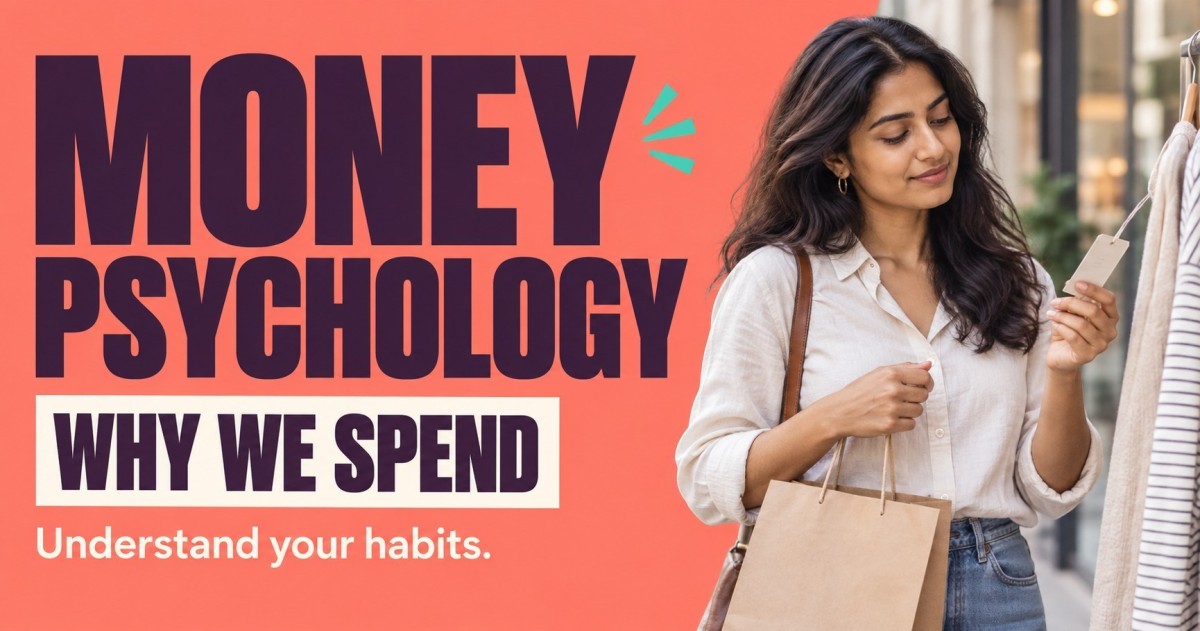
Money Psychology: Why We Spend and How to Build Better Habits
You open a shopping app to check one item and leave with three things you had not planned to buy. Later, you wonder whether you actually needed them.
Money decisions involve more than calculations. Feelings, habits, past experiences and the people around us can influence what we buy and what we avoid.
Money psychology explores how we think, feel and behave around money. Understanding your own patterns can help you make decisions that better match your priorities.

Spending Can Serve an Emotional Purpose
Sometimes a purchase solves a practical problem. At other times, it provides excitement, comfort or a sense of achievement.
There is nothing automatically wrong with buying something enjoyable. The useful question is whether the purchase fits your plans—or whether you repeatedly regret it afterward.
Before an unplanned purchase, ask: “What am I hoping this will do for me?”
Common Influences on Spending
The Fear of Missing Out
A countdown, limited-stock message or temporary discount can make waiting feel costly.
Pause long enough to decide whether you wanted the item before seeing the offer. A discount is only useful when the purchase itself makes sense.
Social Comparison
Seeing other people’s holidays, gadgets or homes can change what feels normal or necessary.
However, a photograph rarely reveals the person’s income, debts or financial support. Their spending is an incomplete guide to what you can comfortably afford.
The “I Deserve It” Purchase
Rewarding yourself can be part of a balanced budget. Problems arise when every difficult day becomes a reason for spending beyond your means.
Planning a realistic enjoyment allowance can make treats easier to appreciate without repeated regret.
Focusing Only on the Monthly Payment
A small instalment can make an expensive purchase feel manageable. Check the total amount payable, repayment period and any charges before deciding.

Build a Pause Into Your Purchases
For a non-essential item, try saving it to a wish list instead of buying immediately. Revisit it the next day.
You may still want it—and that is fine. The pause gives you room to compare the purchase with other priorities.
Other practical options include:
-
Turning off promotional notifications
-
Shopping with a list
-
Setting a spending limit before browsing
-
Removing saved payment details if one-tap buying leads to regret
-
Checking recurring subscriptions regularly
Choose one change that addresses your actual habits rather than creating rules you cannot maintain.
Understand Your Personal Money Story
People can develop different attitudes toward money from their experiences.
Someone who experienced financial uncertainty may feel uncomfortable spending even on something affordable. Another person may associate spending with freedom or belonging.
Reflect on questions such as:
-
What did I learn about money growing up?
-
Which purchases do I regularly regret?
-
When does spending feel most tempting?
-
What do I want my money to make possible?
These questions are for understanding your behaviour, not judging it.
Track Patterns Without Blaming Yourself
Review a few weeks of transactions. Alongside unplanned purchases, note what was happening at the time.
You might notice that late-night browsing, boredom or certain promotional messages often come before spending.
Use that information to adjust your routine. Avoid treating every purchase as a personal failure.
Income, essential costs and unexpected events also affect financial outcomes. Better habits help, but mindset alone cannot resolve every money problem.

Frequently Asked Questions
Is emotional spending always bad?
No. Enjoyment is a valid use of money. Pay attention when purchases repeatedly create financial pressure or regret.
Does mindful spending mean never buying treats?
No. It means choosing purchases deliberately and considering what you can afford.
What is one simple place to start?
Choose a recent purchase you regret and identify what prompted it. Then introduce one small change that might help next time.
Make Room for More Deliberate Decisions
Before your next unplanned purchase, pause and ask whether it supports something you value.
You do not need perfect discipline. A better understanding of your habits can help you make more consistent choices while leaving room to enjoy your money.
What's Your Reaction?
 Like
0
Like
0
 Dislike
0
Dislike
0
 Love
0
Love
0
 Funny
0
Funny
0
 Wow
0
Wow
0
 Sad
0
Sad
0
 Angry
0
Angry
0

Software developer with expertise in full-stack web development and financial market analysis, specializing in building tracking tools for trading metrics.




Comments (0)